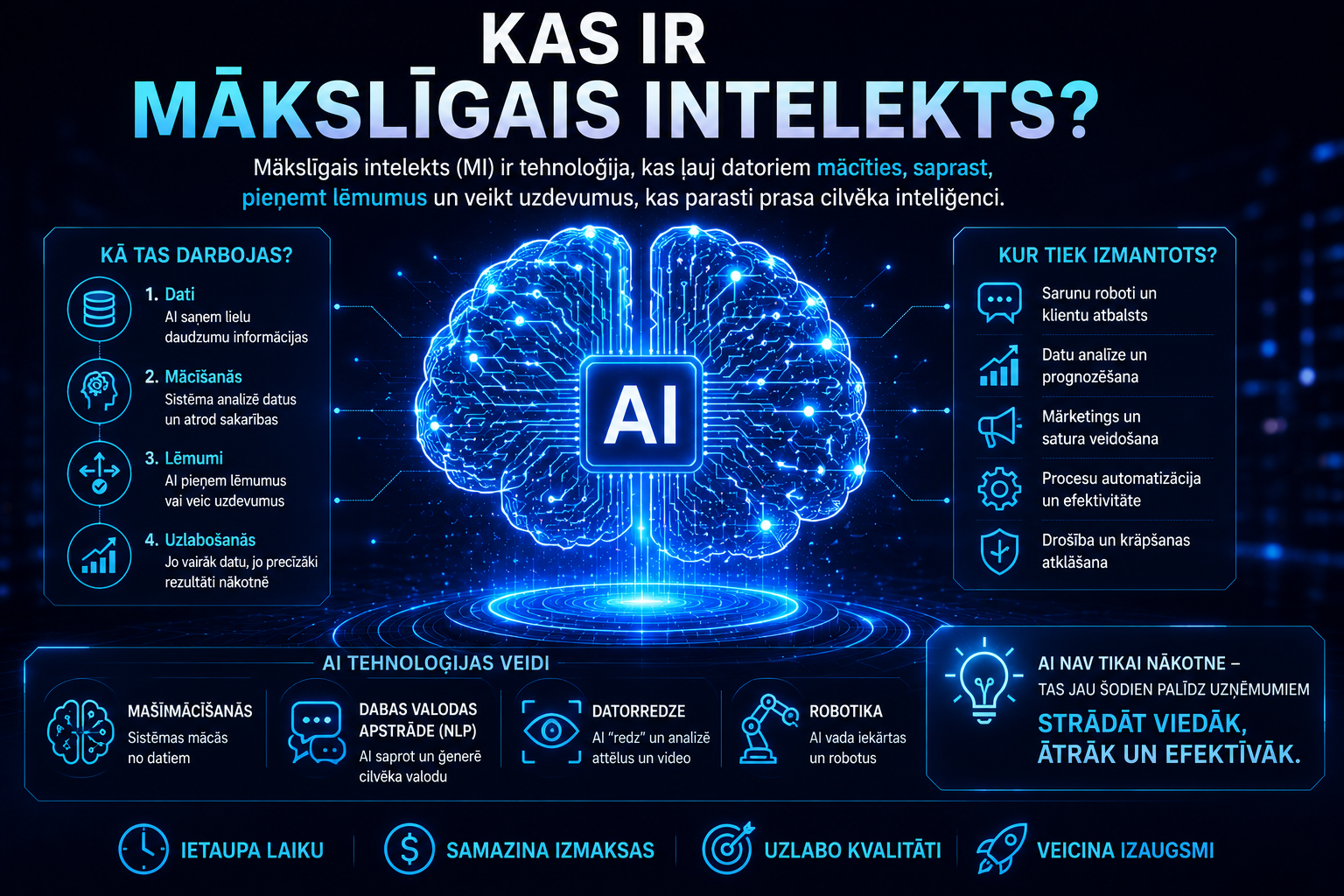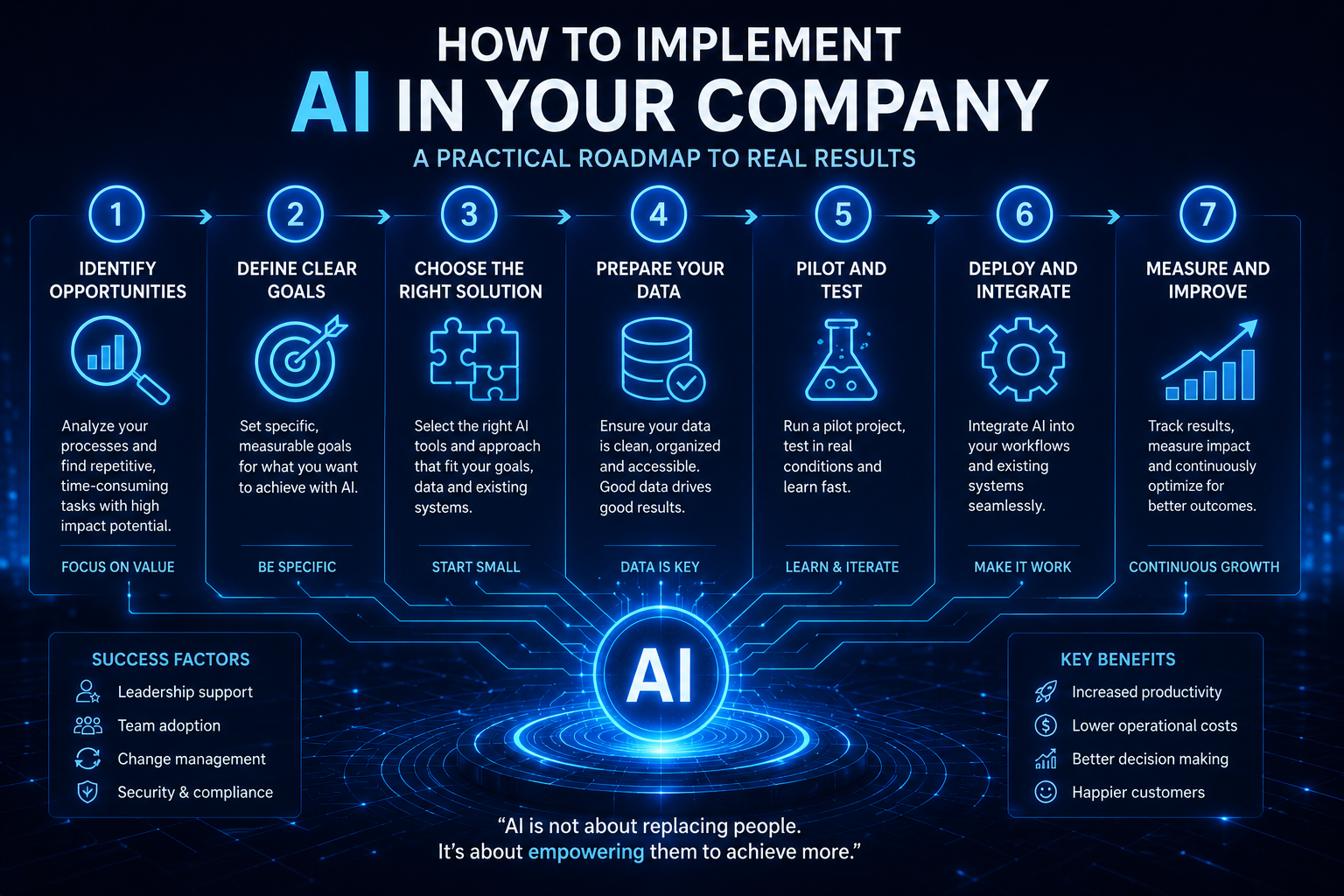
Artificial intelligence is no longer an experimental playground for tech companies — it is rapidly becoming core business infrastructure, much like the internet or cloud computing once did. The real question today is not if companies will adopt AI, but how quickly and effectively they can implement it.
Investment scale: AI is a trillion-dollar shift
Global investment in AI has surged dramatically:
- Over $200 billion was invested in AI solutions in 2024
- By 2030, annual spending is expected to exceed $1 trillion
- Generative AI alone has attracted more than $50 billion annually
Tech giants like Microsoft, Google, and Amazon are each investing tens of billions into AI infrastructure. This signals a long-term structural transformation, not a temporary trend.
Key trends shaping AI in business
1. Automation becomes intelligent
Automation is no longer rule-based — AI can now:
- interpret documents and make decisions
- generate content (text, images, code)
- handle customer service at scale
In some industries like banking, AI already processes up to 70% of customer interactions without human involvement.
2. AI becomes a layer, not a tool
AI is increasingly embedded into existing systems:
- CRM platforms with predictive analytics
- ERP systems with automated supply optimization
- e-commerce platforms with real-time personalization
Companies with existing digital infrastructure are in the best position to benefit quickly.
3. Custom AI solutions drive real value
Off-the-shelf tools only unlock part of AI’s potential. The real impact comes from tailored solutions built on company-specific data.
Examples include:
- logistics optimization based on internal data
- predictive maintenance in manufacturing
- advanced customer segmentation in marketing
This is where many companies get stuck — they see the opportunity but lack a clear execution path. If you're exploring how AI could be applied specifically in your business, you can visit miizstrade.lv for a free consultation and tailored evaluation.
🇱🇻 The opportunity for Latvia
Latvia is not leading in AI — but that can be an advantage.
Like in fintech and e-commerce:
- late adopters can leapfrog legacy systems
- modern solutions can be implemented faster
For Latvian companies, this means:
- higher efficiency with relatively lower investment
- the ability to compete globally using AI as a force multiplier
The cost of inaction
History is clear:
- companies that ignored the internet lost relevance
- companies that ignored e-commerce fell behind
- companies that ignore AI risk losing competitiveness
AI is not just about cost reduction — it enables entirely new capabilities.
The near future: AI as standard
Within the next 3–5 years, AI will become a default layer in most businesses:
- customer support → AI assistants
- analytics → automated insights
- operations → partially autonomous systems
Early adopters will not just gain efficiency — they will understand where AI truly creates value.