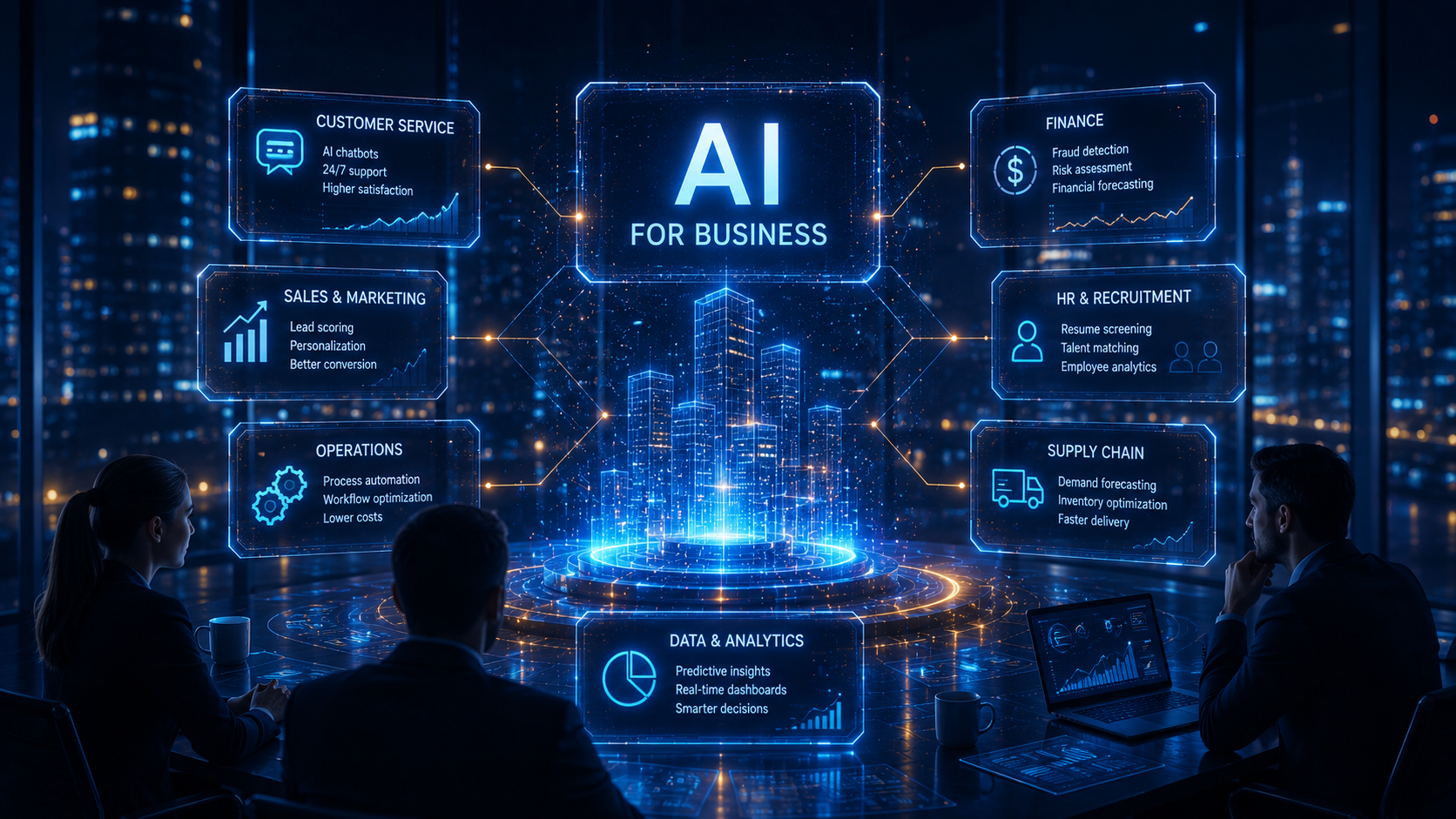
Not long ago, artificial intelligence was viewed by many executives as an interesting technology to watch from a distance. Today, that perspective has changed dramatically. AI is increasingly becoming a practical business tool rather than a futuristic concept. Most organizations begin with relatively simple use cases. Employees use AI to draft documents, summarize information, analyze data, or assist with communication. Even these small improvements can save significant amounts of time. As confidence grows, companies begin exploring more advanced applications. Customer service systems handle routine inquiries automatically. Sales teams use AI to identify opportunities. Managers receive automated insights and forecasts based on operational data. One of the most common misconceptions is that AI's primary purpose is replacing people. In reality, the most successful implementations focus on enhancing productivity rather than eliminating jobs. The result is often straightforward: employees spend less time on repetitive tasks and more time on work that requires judgment, creativity, and human interaction. That shift is where much of the business value emerges. Organizations that successfully integrate AI into daily operations gain a significant advantage. In competitive markets, speed and efficiency frequently determine who moves ahead and who falls behind.
Not long ago, artificial intelligence was viewed by many executives as an interesting technology to watch from a distance. Today, that perspective has changed dramatically.